
Puppy Vaccination Schedule: Questions for Your First-Year Vet Visits
A puppy vaccine plan is a series of veterinary decisions, not a single universal calendar. Use this appointment checklist to organize records, lifestyle risks, and follow-up dates with your veterinarian.
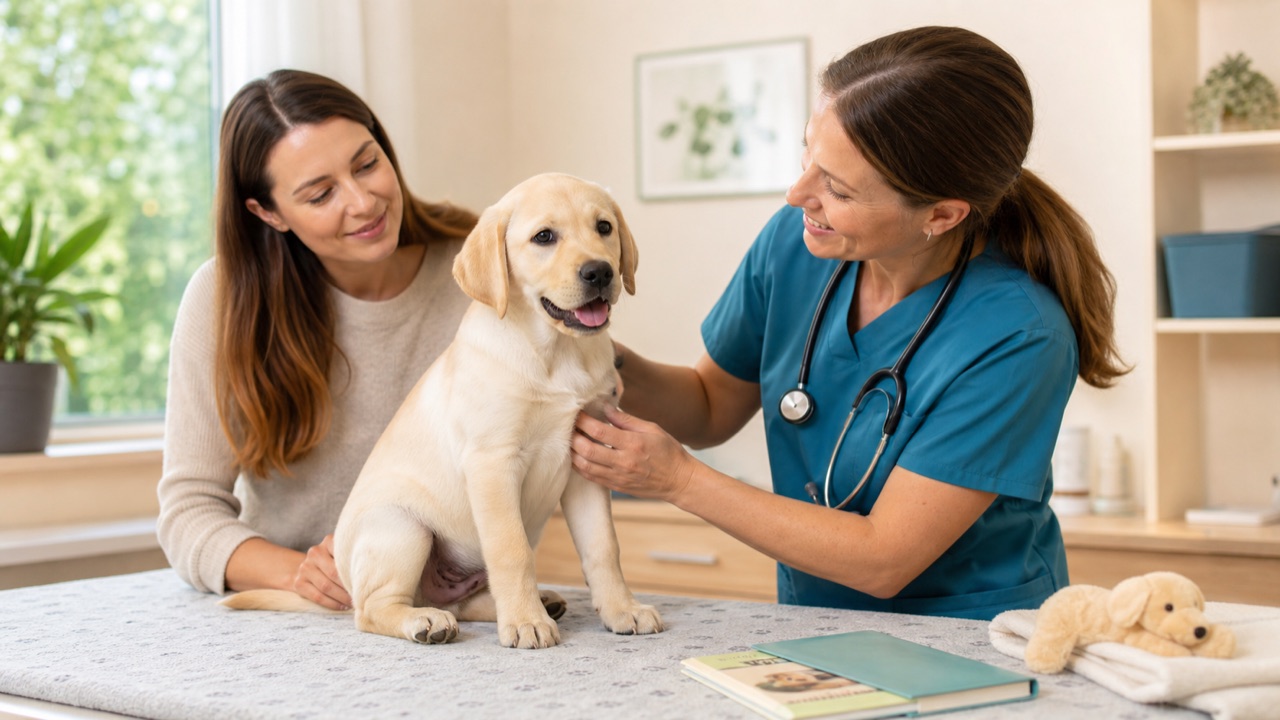
A puppy vaccine plan is a series of veterinary decisions, not a single universal calendar. Age, previous records, local disease risk, travel, boarding, and the product used can change what your veterinarian recommends.
This guide helps you prepare for the conversation. It does not prescribe vaccines or replace an examination. Bring the puppy’s existing records to a veterinarian promptly and follow the clinic’s instructions for your individual dog.
Why the schedule uses a series
AAHA’s canine vaccination guidelines explain that maternal antibodies can interfere with early vaccination. For the common distemper, adenovirus, and parvovirus combination, the guideline recommends a series at two-to-four-week intervals through an age beyond 16 weeks, with the veterinarian adapting the plan to the puppy and product. AAHA core and noncore vaccine recommendations
Do not calculate a missed or uncertain dose by yourself. Give the clinic every record you have, including dates, vaccine names, labels, and the administering practice. The veterinarian can decide whether a record is adequate and how to continue the series.
Build the plan around the puppy’s actual risks
Question to bring | Why it matters |
|---|---|
Which vaccines are core for this puppy? | AAHA identifies vaccines recommended broadly and others chosen from lifestyle and geographic risk. |
What counts as a valid prior dose? | Documentation, age at administration, interval, and vaccine product can affect the plan. |
When may the puppy attend class, daycare, boarding, or public dog areas? | Each environment has a different exposure pattern and may have its own requirements. |
What reactions should prompt a call or emergency care? | Your clinic should give instructions specific to the puppy and the vaccines administered. |
Rabies requirements are also governed by state and local law. Ask the veterinarian what applies where you live and where you plan to travel. Do not use an online schedule as a substitute for that legal and clinical guidance.
Prepare a one-page vaccine record
- Puppy’s name, date of birth, breed or mix, and microchip number if available.
- Date, product, and administering clinic for every documented vaccine.
- Known reactions after previous vaccination or medication.
- Expected activities: puppy class, grooming, boarding, daycare, shows, travel, hiking, or wildlife exposure.
- Planned destinations and approximate dates.
- Next appointment and the clinic’s instructions for activity before it.
Keep the original record and a digital copy. A handwritten seller note may be useful context, but ask the veterinarian whether it provides enough information to count as a medical record.
Separate vaccination from broader preventive care
A first-year visit is also a chance to discuss physical examination findings, parasite prevention, nutrition, growth, dental development, behavior, identification, and emergency planning. AAHA’s canine life-stage checklist treats preventive care as a broader plan rather than a vaccine-only visit. AAHA canine life-stage checklist
Ask how to contact the practice after hours and which emergency hospital it uses. Save those details before you need them.
When to call instead of waiting for the next appointment
Contact a veterinarian promptly if a puppy appears ill, has persistent vomiting or diarrhea, becomes unusually weak, has difficulty breathing, collapses, or shows another urgent change. Do not delay care because the next routine vaccine visit is already booked.
If you are concerned about a reaction after vaccination, follow the discharge instructions and call the administering clinic. Online symptom lists cannot determine severity for an individual puppy.
Puppy vaccination appointment checklist
- I have gathered every available vaccine and veterinary record.
- I have listed the puppy’s likely activities, travel, and animal contacts.
- I know the next appointment date and what it is intended to cover.
- I understand the clinic’s advice about public spaces before the series is complete.
- I know whom to call about a possible reaction or illness.
- I will keep the record current instead of relying on memory.
Frequently asked questions
Is there one vaccination calendar for every puppy?
No. Guidelines provide a framework, while veterinarians adapt it to age, records, product labeling, law, location, lifestyle, and medical factors.
Does one early vaccine mean a puppy is fully protected?
Do not assume so. The puppy series addresses changing maternal antibodies and developing immunity. Ask your veterinarian when protection is expected and what exposure precautions to use.
Should I repeat a vaccine if the paperwork is unclear?
Give the paperwork to a veterinarian and let the clinic decide. Do not add or skip doses without professional guidance.
Are lifestyle vaccines unimportant?
No. A vaccine categorized by lifestyle may be important for an individual dog because of geography, travel, boarding, wildlife, or other exposure.
How We Researched This Guide
We reviewed AAHA’s canine vaccination guidelines, its core and noncore recommendation table, and its canine life-stage checklist on September 26, 2026. The article organizes questions for a veterinary appointment and does not create an individualized vaccine protocol.