
Your Puppy’s First Night Home: A Calm, Practical Routine
The first night is about safety, toileting, rest, and a predictable response—not perfect sleep. Prepare the sleeping area and emergency contacts before the puppy arrives.
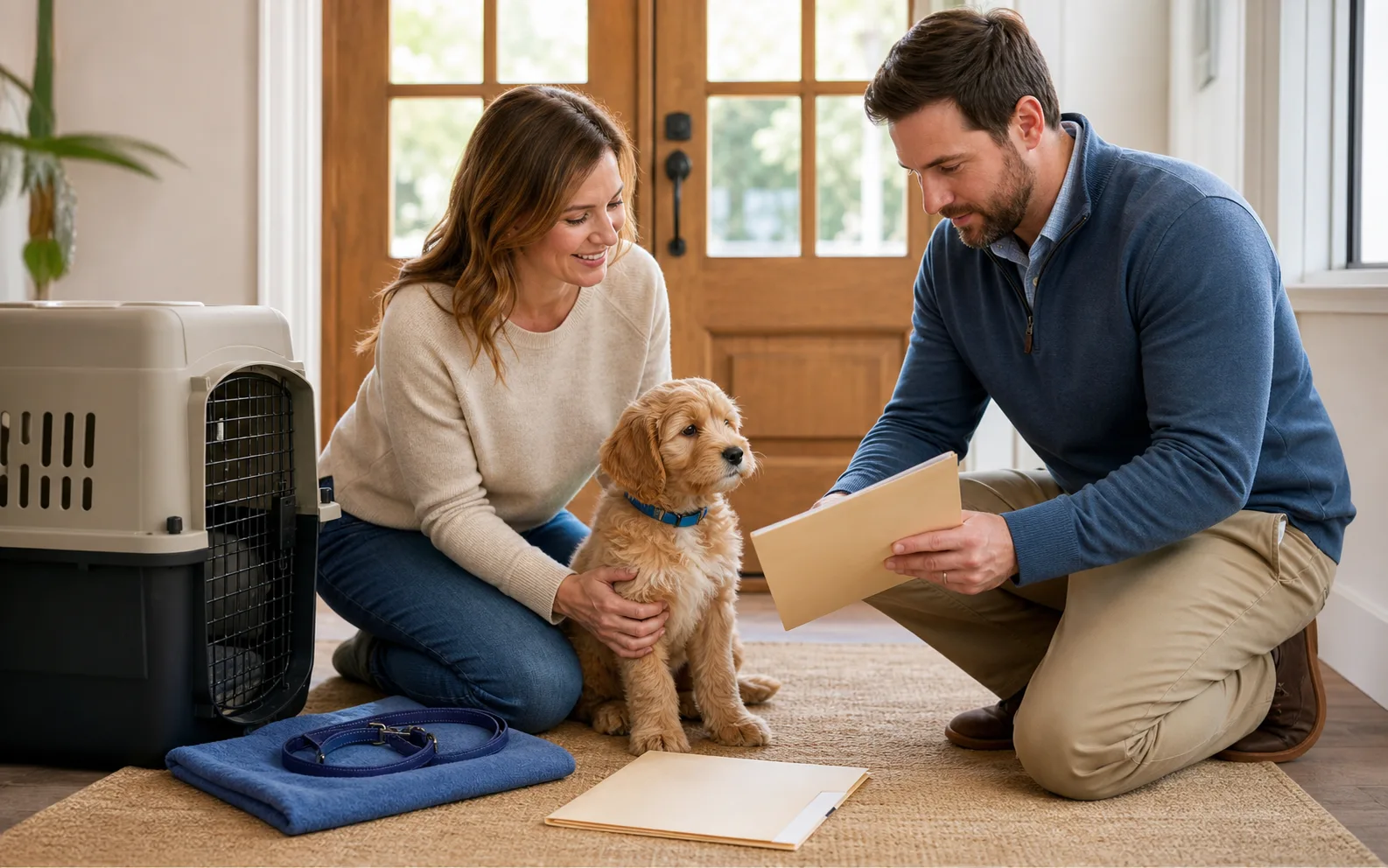
The first night is about safety, toileting, rest, and a predictable response—not perfect sleep. A puppy has just left a familiar environment and may vocalize, wake, or need help finding a new routine.
Prepare the sleeping area, toilet route, veterinary contacts, and morning plan before pickup. Keep the first evening quiet enough to observe the puppy rather than introducing every person and activity at once.
Before the puppy enters the house
- Confirm what and when the puppy has been eating.
- Ask for veterinary, vaccine, medication, and microchip records.
- Choose a contained sleeping area and remove hazards.
- Plan the toilet location and a well-lit route.
- Save the regular veterinarian and emergency hospital contacts.
- Agree on household rules for doors, stairs, furniture, and children.
Keep arrival low pressure
Take the puppy to the planned toilet area according to your veterinarian’s disease-exposure guidance. Then allow a limited exploration of the prepared puppy zone. Offer water and follow the known feeding plan rather than creating a buffet of new foods.
Delay crowded greetings. Give children simple rules: sit, let the puppy approach, avoid hugging, and leave the puppy alone while eating or sleeping.
Use a simple evening timeline
Stage | Focus |
|---|---|
Arrival | Toilet opportunity, water, small safe area, observation |
Early evening | Short calm interaction, familiar food, another toilet trip |
Wind-down | Lower activity, quiet chewing or settling, final planned trip |
Night | Nearby safe sleep area and calm response to a likely toileting need |
Morning | Immediate toilet trip, record the night, begin the daily routine |
AKC’s first-day guidance recommends a bedtime routine and notes that some puppies need a quiet nighttime toilet trip. AKC first day with a new puppy
Respond to nighttime crying thoughtfully
Pause and consider timing, recent toileting, intensity, and body language. A very young puppy may genuinely need to eliminate. Use a calm, boring toilet trip, then return to the sleep routine.
Do not turn every sound into play, but do not assume persistent distress is manipulation. Check comfort, temperature, safety, and health. If the puppy is panicking, repeatedly vomiting, has diarrhea, seems weak, has difficulty breathing, or shows another urgent change, contact veterinary care.
Set up sleep for safety
A positively introduced crate or secure pen can limit dangerous roaming. The puppy should have enough room and an appropriate setup for the chosen method. Follow product instructions, remove entanglement hazards, and consider whether bedding or toys can be safely left unsupervised with this puppy.
Place the sleep area near enough to monitor during the adjustment. You can move it gradually later if another location is the long-term goal.
Do not judge the future by one night
Interrupted sleep, an accident, or cautious behavior does not predict the adult dog. Record what happened and adjust the next evening. Keep meals, toileting, naps, and bedtime more consistent over the following days.
AKC’s guidance on first puppy skills prioritizes housetraining, crate comfort, routine, and gradual alone-time practice. AKC first behaviors to teach
First-night checklist
- The sleep area is assembled and puppy-proofed.
- The toilet route is ready before bedtime.
- I know the puppy’s current food and last meal time.
- Records and emergency contacts are accessible.
- The household agrees on a calm response plan.
- The morning schedule allows an immediate toilet trip and supervision.
Frequently asked questions
Should the puppy sleep in my bed on the first night?
Choose the long-term rule and consider fall, chewing, toileting, and supervision risks. A nearby secure puppy area is often easier to manage.
Should I ignore all crying?
No universal rule fits every sound. Consider toileting, distress, discomfort, and health while keeping nighttime responses calm and predictable.
What if the puppy will not eat?
A major transition can affect appetite, but a young puppy can also become ill quickly. Contact the veterinarian for case-specific guidance, especially with weakness, vomiting, diarrhea, or persistent refusal.
When should the first veterinary visit happen?
Arrange it promptly according to your veterinarian’s advice and any purchase or adoption agreement. Seek care sooner for concerning signs.
How We Researched This Guide
We reviewed AKC guidance on the first day, first-night routine, early puppy skills, and AAHA’s puppy life-stage checklist on September 26, 2026. The timeline is an original planning aid and not a medical monitoring protocol.