
How to Socialize a Puppy Safely Before the Vaccine Series Is Complete
Early socialization and infection control are not all-or-nothing choices. Build a veterinarian-approved plan that uses controlled, positive exposure without treating every public place as safe.
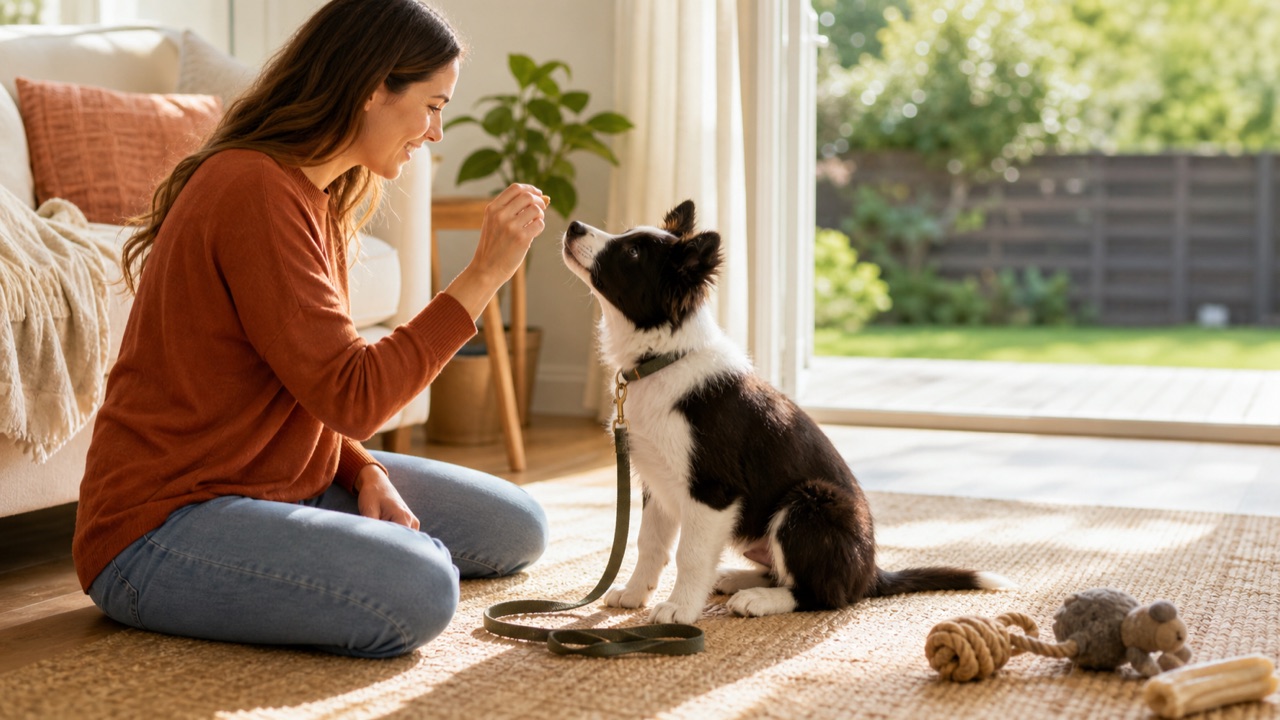
Early socialization and infection control are not all-or-nothing choices. A puppy needs positive exposure to people, sounds, surfaces, handling, and suitable animals, but the safest plan depends on local disease risk and the puppy’s vaccination history.
Ask your veterinarian what environments to avoid and which controlled activities are appropriate. This guide helps organize that plan; it does not declare a specific place safe for every puppy.
Understand the goal of socialization
Socialization is not forcing a puppy to greet everyone. The goal is to help the puppy experience ordinary life at an intensity they can handle. The American Veterinary Society of Animal Behavior emphasizes the importance of early socialization and discusses puppy classes during the vaccination period. AVSAB puppy socialization position statement
A useful exposure leaves the puppy able to observe, eat, play, explore, or recover. If the puppy freezes, hides, struggles to escape, refuses food, or remains distressed, create distance and make the next session easier.
Use a risk-managed exposure ladder
Lower-contact idea to discuss with your veterinarian | Risk-control question |
|---|---|
Watch traffic, people, carts, and bicycles from a clean carried position or vehicle | Can the puppy avoid contaminated ground and unknown dogs? |
Meet calm people at home | Can visitors follow the puppy’s pace and avoid overwhelming handling? |
Explore household surfaces, sounds, and objects | Can volume and movement begin gently? |
Meet a known healthy, appropriately vaccinated dog | Has the veterinarian approved the contact and setting? |
Attend a well-managed puppy class | What health screening, cleaning, vaccine, and age policies does the class use? |
Unknown-dog traffic, fecal contamination, and local outbreaks can change the risk. Dog parks and uncontrolled gathering areas are not equivalent to a screened puppy class or a private home. Use the veterinarian’s local guidance rather than copying another owner’s timeline.
Make every exposure optional and positive
- Begin far enough away that the puppy can notice without panicking.
- Pair the experience with food, play, or calm distance when the puppy is comfortable.
- Let the puppy approach when safe instead of pulling them toward a person or object.
- Keep sessions short and stop before the puppy is exhausted.
- Repeat easy experiences; novelty alone is not the goal.
- Protect sleep and quiet recovery time.
Do not punish barking, retreating, or hesitation. Those behaviors provide information about the puppy’s comfort. AVSAB recommends reward-based methods and advises against aversive tools and techniques. AVSAB humane dog training statement
Screen a puppy class before enrolling
Ask about minimum age, vaccination requirements, cleaning protocol, class size, instructor qualifications, and how fearful puppies are handled. Observe a class if possible. Look for space, controlled greetings, reward-based instruction, and instructors who allow puppies to opt out.
A class should not be uncontrolled group play. Puppies differ in size, confidence, and play style. The instructor should interrupt mismatched play and provide rest.
Create a socialization record
Use four columns: experience, distance or intensity, puppy’s response, and next step. “Umbrella opened across the room; puppy watched and ate; repeat at the same distance” is more useful than checking a box labeled “umbrellas.”
Progress is not linear. A puppy may be comfortable one day and cautious the next. Pain, fatigue, illness, and developmental changes can affect behavior.
When to seek help
Ask a veterinarian about sudden behavior change, persistent fear, possible pain, or illness. For significant fear, aggression, or inability to recover, request a referral to an appropriately qualified reward-based professional. Avoid flooding the puppy with the trigger in an attempt to make them “get over it.”
Frequently asked questions
Must a puppy stay inside until every vaccine is complete?
Do not make that decision from a generic rule. Ask your veterinarian about local disease risk and controlled ways to provide early socialization.
Does socialization mean meeting many dogs?
No. It includes calm exposure to people, environments, sounds, surfaces, handling, and selected animals. Quality and the puppy’s emotional response matter.
What if my puppy does not want to greet someone?
Give the puppy distance and do not force contact. Reward calm observation and try an easier version later.
Is puppy class safe?
Safety depends on the puppy, local disease conditions, and the class’s health and management practices. Review those details with your veterinarian.
How We Researched This Guide
We reviewed AVSAB’s current puppy socialization and humane training position statements and AAHA’s canine vaccination guidelines on September 26, 2026. The exposure ladder is an editorial planning tool, not a guarantee that a location is disease-free.