
What to Expect on Puppy Pickup Day: Step-by-Step Checklist
A safe pickup confirms the puppy’s identity and condition, completes the contract and records, reviews care instructions, and prepares for a calm trip home.
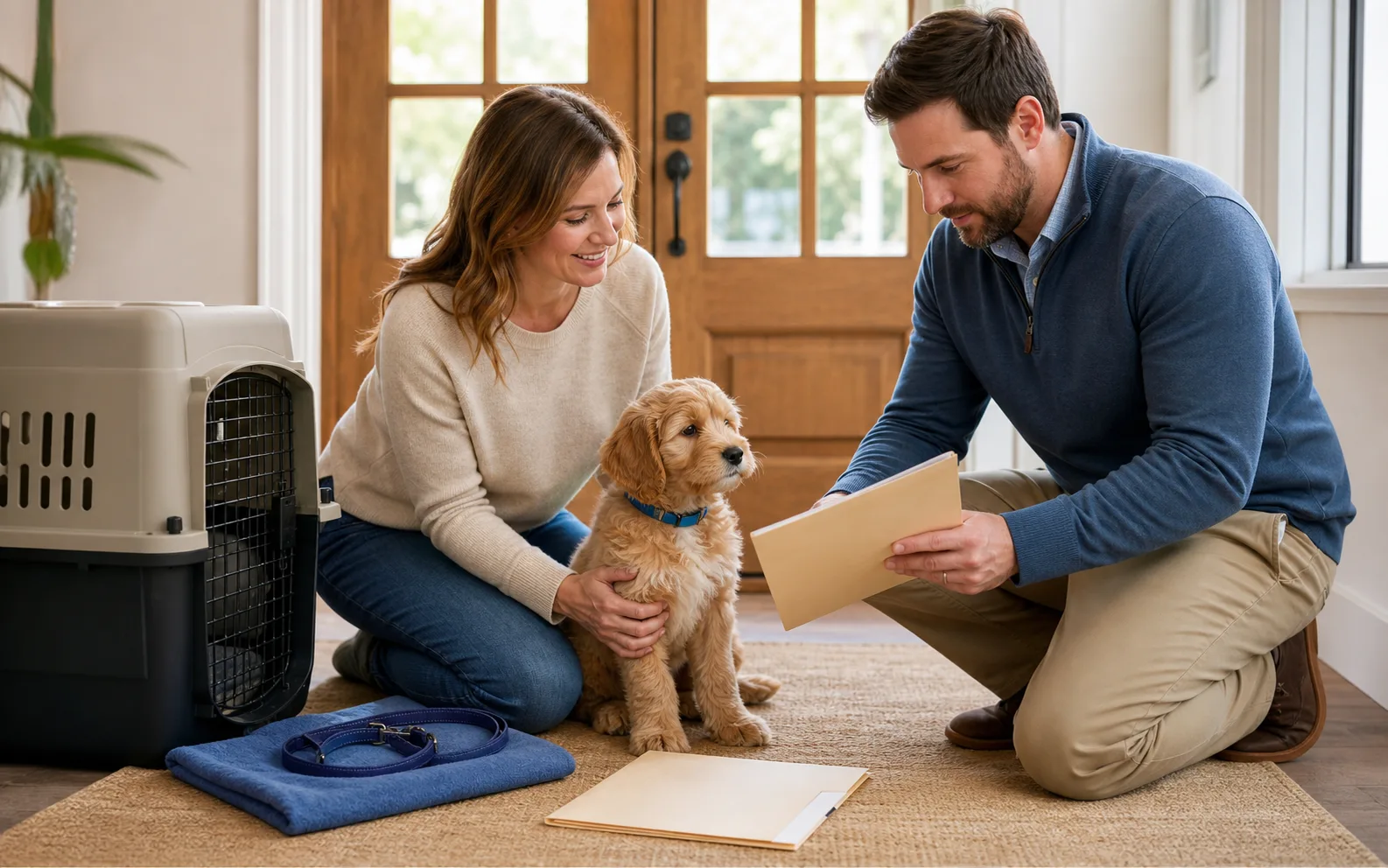
Quick answer: Pickup day should be a calm verification and handoff, not a rushed exchange. Before leaving, identify the exact puppy, observe its current condition, read and sign the final agreement, collect veterinary and registration records, confirm payment, review food and routine, and secure the puppy safely for travel.
Before you travel
Reconfirm the address, time, balance due, accepted payment method, people authorized to sign, and every item the breeder will provide. Save the breeder’s phone number offline and tell another person where the handoff will occur.
Prepare a correctly sized secured crate or travel restraint, absorbent bedding, water, cleanup supplies, and an appropriate temperature-controlled route. Long journeys need planned breaks, but young puppies should avoid high-traffic dog areas until a veterinarian advises what is safe.
- Bring your copy of the agreement and questions.
- Confirm weather and travel duration.
- Pack the same food the puppy currently eats.
- Schedule the first veterinary appointment in advance.
At the handoff
Compare the puppy’s sex, color, markings, birth date, and microchip number with the records. Observe breathing, alertness, movement, eyes, coat, hydration, and stool information without trying to perform your own medical diagnosis. If the puppy seems unwell, pause and contact a veterinarian before traveling.
Read final documents before sending the remaining payment. Obtain a receipt that identifies the puppy and amount. Ask the breeder to explain feeding, sleep, toilet routine, recent medications, vaccination dates, and any behavior observed in the litter.
- Scan or verify the microchip when possible.
- Collect signed contract and itemized receipt.
- Take veterinary, vaccination, and treatment records.
- Record registration and ownership-transfer instructions.
The trip and first 24 hours
Keep the trip quiet and predictable. Do not allow an unsecured puppy to ride on a lap or wander in the vehicle. Offer water appropriately, monitor temperature, and avoid introducing a crowd of visitors immediately on arrival.
Show the puppy a small safe area, toilet location, water, and sleeping space. Maintain the familiar food at first unless a veterinarian advises otherwise. Contact the breeder and veterinarian promptly for repeated vomiting, diarrhea, breathing difficulty, collapse, severe lethargy, or another urgent concern.
- Use a safe, secured travel setup.
- Keep introductions short and supervised.
- Photograph and store all documents.
- Complete the contract-required veterinary examination on time.
Frequently asked questions
Should I pay the final balance before seeing the puppy?
Avoid sending an unexpected final payment under pressure. Follow the verified written agreement and confirm the puppy, seller, documents, and handoff details first.
What food should I bring home?
Ask for the exact brand, formula, portion, and schedule. Sudden diet changes can upset digestion, so discuss any transition with your veterinarian.
When should the first vet visit happen?
Follow the signed agreement and book promptly—often within the contract’s examination window. A veterinarian should set the ongoing care plan.
Sources and review notes
Use the AKC Help Center for current registration support and rely on your veterinarian for travel and health decisions. Contract and transport requirements vary by jurisdiction. This article is educational and does not replace veterinary, legal, insurance, or financial advice.