
Beagle vs Basset Hound: A Family Dog Comparison
Compare Beagles and Basset Hounds by activity, scent drive, voice, training, grooming, body structure, health-screening questions, and family routine.
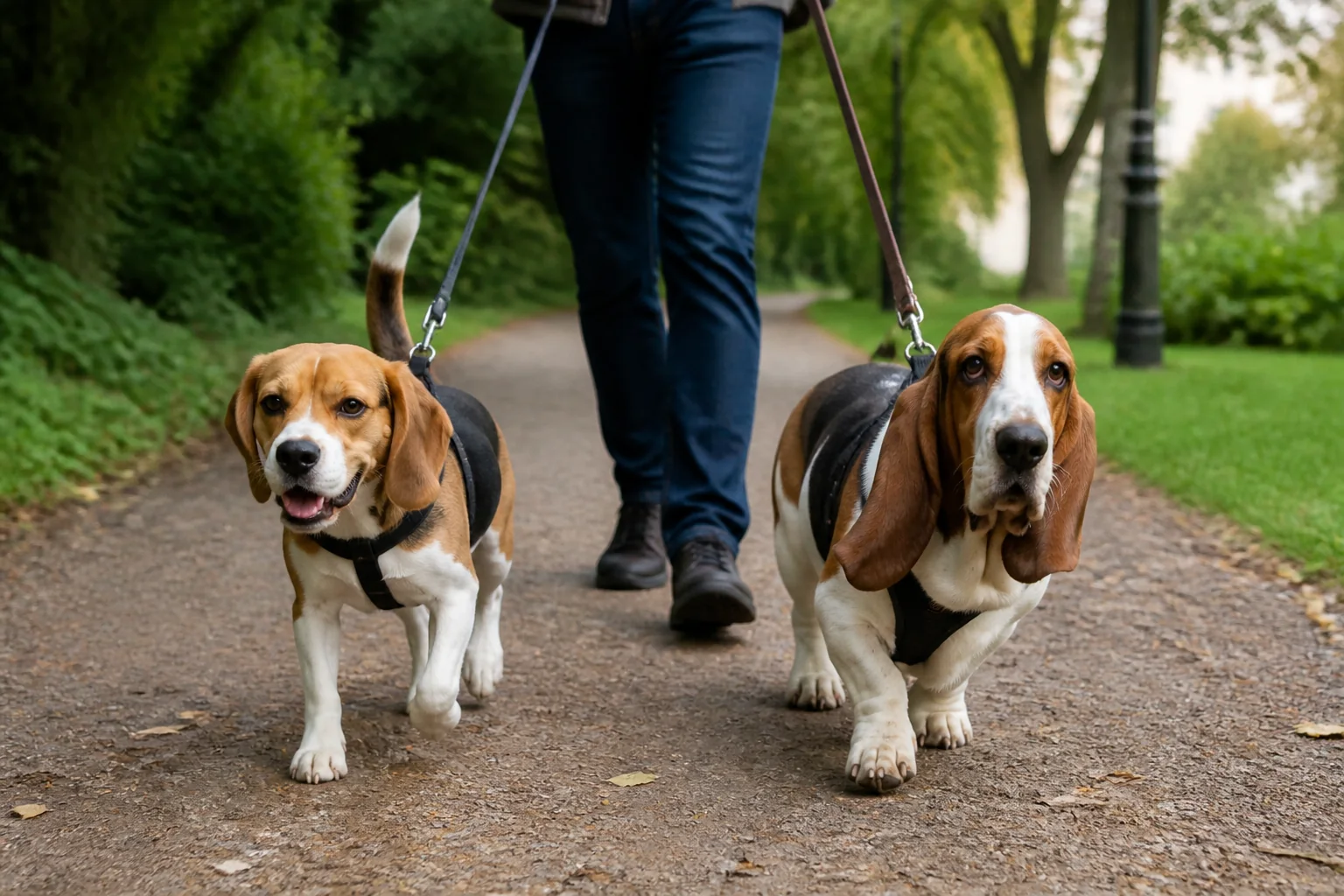
Comparison summary: Beagles and Basset Hounds are scent-driven hounds that usually do best with secure leashes, patient positive training, and families who can live with vocal communication. Beagles are generally the more athletic, busy choice. Basset Hounds are lower to the ground and often less intense in speed, but they still need daily movement and careful weight management. “Lower energy” does not mean no work.
Beagle vs Basset Hound at a glance
| Question | Beagle | Basset Hound |
|---|---|---|
| Activity | Active, curious, and ready to explore | Steadier pace, but regular walks still matter |
| Scent drive | Strong; can follow trails quickly | Strong; methodical tracking and persistence |
| Voice | Barking and baying can be prominent | Deep baying and vocal responses can be prominent |
| Training | Food-motivated, easily distracted by scent | Patient repetition; scent can outweigh handler requests |
| Grooming | Short coat, shedding, routine ears and nails | Short coat, ears, skin folds, nails, and drool management |
Exercise and enrichment
Beagles often suit families who enjoy active walks, scent games, and structured play. Basset Hounds may prefer a slower pace, but daily controlled exercise supports muscle, mobility, and weight management. Neither breed should be trusted off leash in an unsecured area simply because training went well indoors.
Use food-search games, short training sessions, and safe sniffing routes. Mental enrichment should complement—not replace—age-appropriate movement and veterinary care.
Training around a powerful nose
Both breeds were developed to work with scent. That means distraction is expected, not defiance. Reward check-ins, build recall on a long line in secure areas, and practice settling away from the most exciting smells. Harsh corrections can damage trust without making scent less valuable.
Children, other pets, and household noise
Breed reputation cannot replace supervision. Teach children to leave sleeping and eating dogs alone, provide the puppy with an escape space, and introduce resident animals gradually. Ask the breeder how the parents respond to handling, noise, visitors, and other dogs.
Listen to adult examples of beagle and basset vocalization before choosing. Apartment suitability depends on walls, neighbors, routine, enrichment, and the individual dog—not size alone.
Health and breeder questions
- Which current parent-club health screenings were completed for both parents?
- Can the results be verified in OFA or another relevant registry?
- How are ears, skin, weight, eyes, joints, and mobility managed in the adult dogs?
- What temperament patterns has the breeder observed across previous litters?
- What support is provided if your veterinarian identifies a concern?
Which hound fits your family?
A Beagle may fit better when the household wants a more active compact hound and can provide structured outlets. A Basset Hound may fit better when the household prefers a steadier pace and can manage the breed's ears, body structure, weight, and mobility carefully. Meet healthy adults of both breeds before deciding.
Sources and review notes
Review the AKC profiles for the Beagle and Basset Hound, and use the OFA breed screening directory for current parent-club recommendations. Individual health and temperament vary.