
Collie Puppies: Family Life, Grooming, and Training Guide
Understand rough and smooth Collies, daily exercise, coat care, training, sensitivity, family routines, breeder questions, and the work behind a confident puppy.
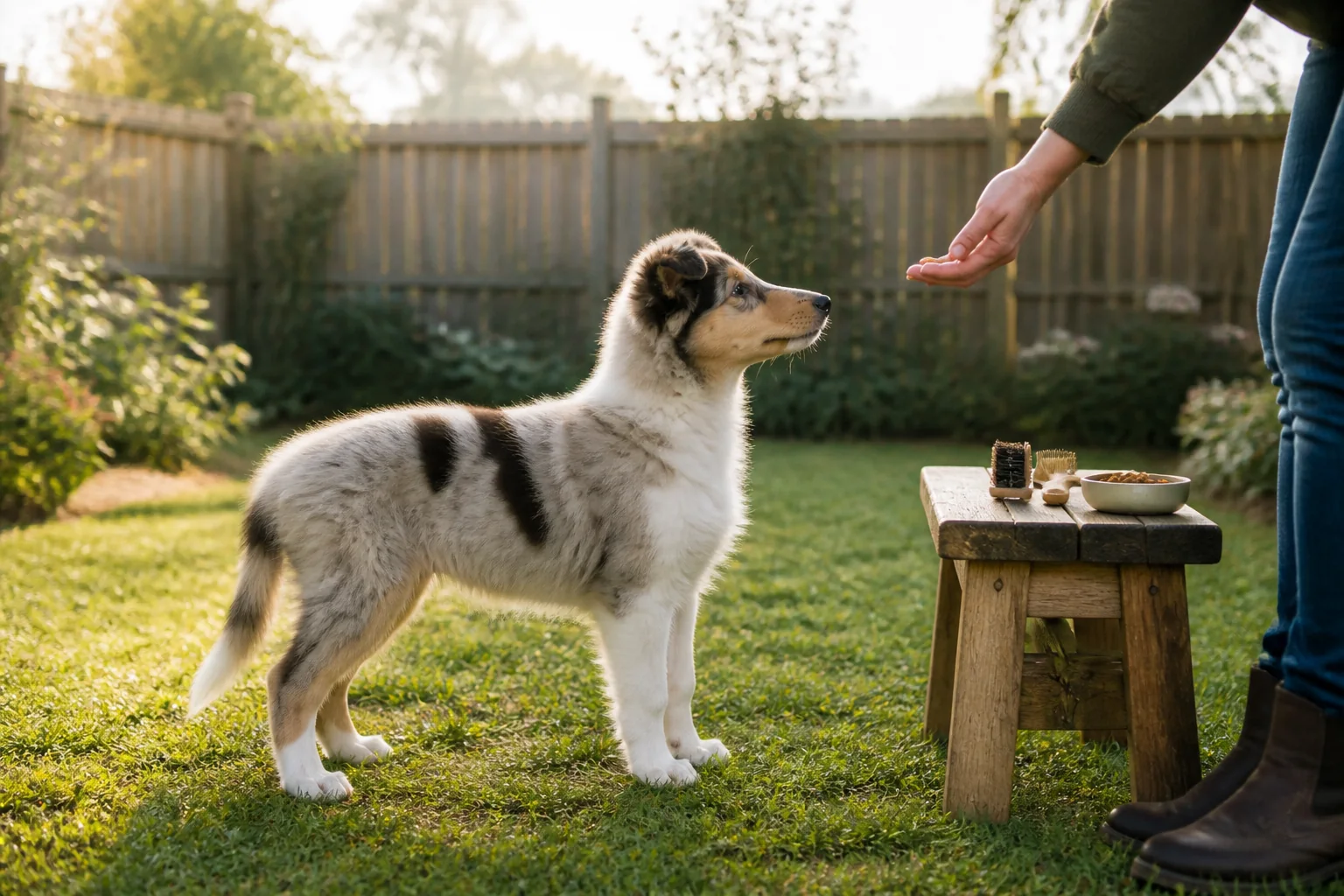
Buyer summary: Collies are intelligent, people-oriented herding dogs available in rough and smooth coat varieties. They often learn quickly and value family contact, but they still need daily exercise, thoughtful socialization, positive training, and an outlet for alertness. The rough coat requires substantially more brushing; the smooth variety is not maintenance-free and still sheds.
Rough Collie or Smooth Collie?
The AKC recognizes the familiar full-coated rough variety and the shorter-coated smooth variety. The core breed is the same, but household maintenance differs. Rough coats need regular work through the undercoat and feathering, especially behind ears, around legs, and where friction creates mats. Smooth Collies still need brushing, nail care, ear checks, and seasonal shedding management.
Ask the breeder to demonstrate a complete grooming session and show adult relatives in normal household condition. A perfect show photo does not reveal the weekly routine.
Temperament and family life
Many Collies are attentive to people and responsive to household patterns. Herding heritage can appear as movement sensitivity, alert barking, circling, or attempts to control running children and pets. Those behaviors need management and reward-based teaching rather than punishment.
- Provide a quiet place where the puppy can sleep without being followed.
- Supervise every interaction with young children.
- Reward calm behavior around doors, visitors, bicycles, and running games.
- Introduce resident animals gradually and prevent chasing practice.
Exercise and mental work
A Collie puppy benefits from several short age-appropriate sessions instead of forced distance running. Combine sniffing walks, play, simple training, food puzzles, and calm observation of the world. Increase impact and duration gradually with veterinary guidance as the puppy matures.
Adult Collies often enjoy obedience, rally, scent work, herding activities, hiking, and family games. The goal is a sustainable routine that includes recovery and sleep, not constant stimulation.
Training a sensitive, observant puppy
Use clear cues, small rewards, and short repetitions. Collies may notice tone, body movement, and environmental changes quickly. If the puppy shuts down or becomes frantic, reduce difficulty and restore predictability. Socialization should create safe positive experiences, not force the puppy into every person's arms or a crowded dog park.
- Teach name response, recall, handling, and settling first.
- Practice grooming in seconds before expecting a full session.
- Reward four paws on the floor around greetings.
- Use barriers and distance to prevent rehearsal of chasing.
- Work with a qualified reward-based professional when fear persists.
Health and breeder research
Ask for the current parent-club health screening recommendations and verify results for both parents. Discuss eyes, hips, genetic tests relevant to the breed, medication sensitivities, and health patterns in previous generations. Screening reduces uncertainty but does not guarantee an individual puppy's future health.
Also evaluate how puppies are raised: handling, surfaces, household sounds, car experience, grooming practice, and recovery after mild novelty. A breeder's longitudinal observations are more useful than a single dramatic temperament test.
Collie puppy buyer checklist
- Choose rough or smooth coat with an honest grooming plan.
- Meet or view adult relatives and ask about barking and sensitivity.
- Verify breed-relevant parent health results.
- Ask how the litter is socialized without overwhelming puppies.
- Review records, contract, return terms, and pickup plan before payment.
- Budget for grooming tools, training, preventive care, and emergencies.
Sources and review notes
Use the AKC Collie breed profile, the OFA breed screening directory, and your veterinarian for individual health and exercise decisions. Breed descriptions are tendencies, not promises about a specific puppy.