
Buying a Puppy From Another State: A Safe Planning Checklist
Verify the seller and puppy first, then confirm destination-state health rules, the veterinary certificate, transport method, weather limits, and handoff records.
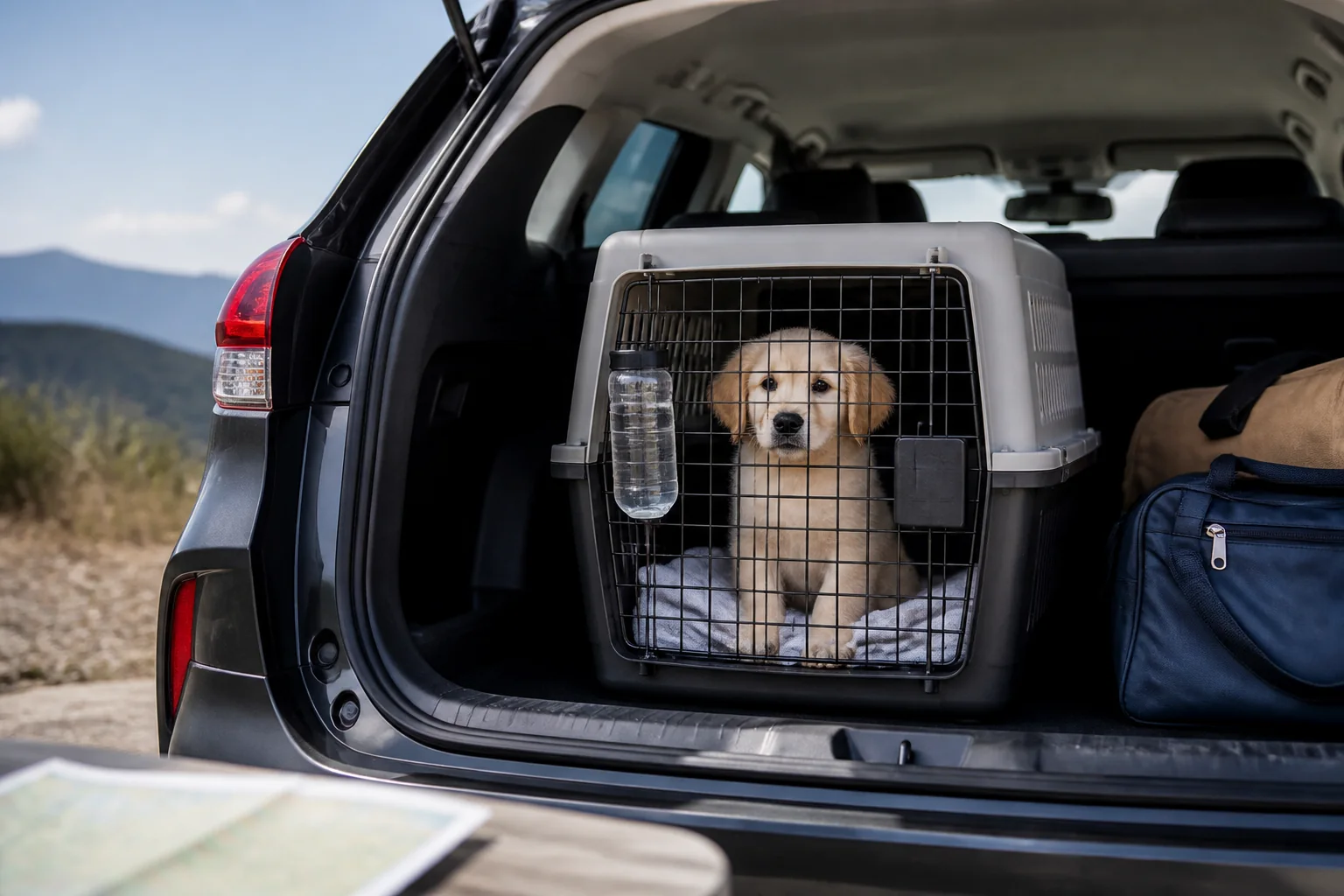
Quick answer: buying a puppy from another state can be planned responsibly, but distance adds verification, health, legal, and transport steps. Confirm the puppy and seller before paying; then check the destination state's current animal-entry rules, arrange any required veterinary certificate, and put the complete delivery plan and cost in writing.
Start with the destination state, not the transport quote
USDA APHIS explains that domestic pet-movement requirements are set by the receiving state or territory. Depending on the destination and circumstances, requirements may involve a health certificate, vaccinations, tests, treatments, or other documentation. Contact the destination state animal health official and involve a veterinarian as soon as the route is known.
A seller saying “we ship everywhere” is not proof that the puppy meets every destination rule. Ask who is responsible for confirming requirements, obtaining the certificate, and paying for changes if the puppy cannot travel on the planned date.
Verify the seller and the specific puppy first
- Hold a live video call that shows the puppy moving and responding in real time.
- Compare the listing, seller profile, contract, and payment recipient.
- Request current veterinary records and the puppy's identifying details.
- Confirm who owns the puppy and who will sign the agreement.
- Do not let a departure deadline replace normal verification.
Compare pickup and transport options
Buyer pickup by car
Meeting the seller allows you to compare the puppy with the listing and collect records directly. Prepare a secure crate, water, temperature control, planned rest stops, and an emergency veterinary contact. The driver should not handle or photograph the puppy while driving.
Flight nanny or ground transporter
Get the transporter's legal name, contact details, route, handoff procedure, animal-care plan, cancellation terms, and total price. Confirm whether the person is acting as the seller's agent or as an independent service. Ask how delays, extreme weather, illness, and rejected paperwork are handled.
Air travel
Airline policies vary and can be stricter than minimum government rules. USDA guidance requires dogs and cats to be at least eight weeks old and fully weaned for regulated air transport, and it highlights added risk for short-nosed breeds. Verify the current carrier policy directly before payment.
Put the full handoff plan in writing
- Total puppy price, deposit, remaining balance, and transport fee.
- Exact pickup location, date, and identity of the person handing over the puppy.
- Required health documents and who obtains them.
- Weather, illness, and cancellation contingencies.
- What happens if the puppy does not match the listing or records.
- The independent veterinary examination window after arrival.
Frequently asked questions
Does one health certificate work for every state?
No single assumption covers every destination. Use the current requirement published for the receiving state and ask its animal health office when wording is unclear.
Should I pay the transporter separately?
Only after the responsibilities, recipient, amount, refund terms, and relationship to the seller are clear in writing. Unexpected “insurance” or “crate” charges after payment are a reason to stop.
Is home delivery safer than pickup?
Neither option is automatically safer. Evaluate the puppy's health, distance, weather, carrier, documentation, traceability, and your ability to verify the handoff.
Sources and review notes
Use the USDA APHIS state-to-state pet travel directory and air-travel preparation guidance. Rules and carrier policies change; verify them for the exact route before travel.