
How to Leash Train a Puppy with Positive Reinforcement
Teach a puppy to wear a harness or collar, follow gentle leash pressure, check in, and walk calmly through short positive sessions.
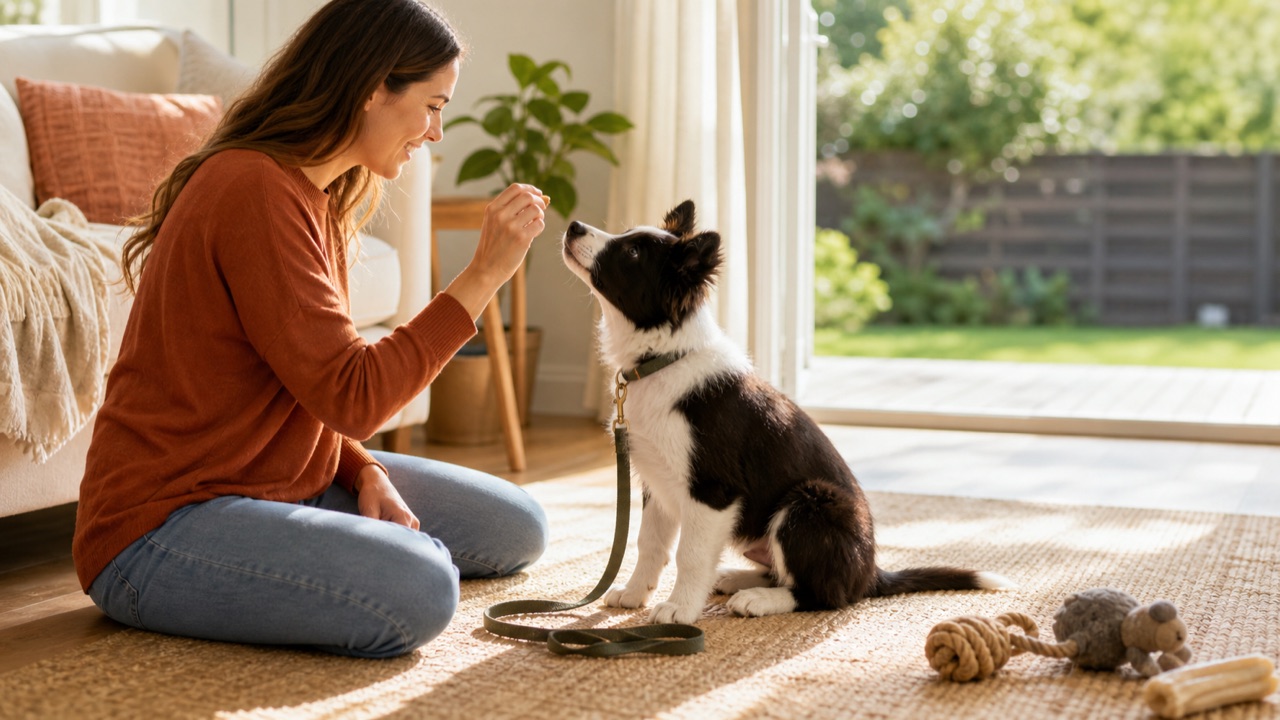
Teach a puppy to wear a harness or collar, follow gentle leash pressure, check in, and walk calmly through short positive sessions.
Introduce equipment before the first walk
Let the puppy investigate a properly fitted collar or harness, then put it on briefly while offering food or play. Check the fit often because puppies grow quickly. Attach a lightweight leash indoors under supervision and reward calm movement so the equipment does not predict pulling or conflict.
- Choose secure equipment sized for the puppy rather than relying on room to grow.
- Prevent chewing or dragging the leash without supervision.
- Remove the equipment if it rubs, restricts movement, or causes distress.
Reward the position you want
Begin in a low-distraction space. Mark and reward the puppy for looking toward you, moving with the leash loose, and returning when gentle tension appears. Take only a few steps at first. If the leash tightens, pause or change direction instead of jerking the puppy back.
- Deliver rewards near your leg to build a useful walking position.
- Use a cheerful cue and reward voluntary check-ins.
- Keep sessions short enough that the puppy can still succeed.
Increase difficulty gradually
Move from the home to a quiet private area, then to carefully chosen public environments when veterinary guidance says exposure is appropriate. Distance, duration, surfaces, people, and dogs are separate challenges. Increase only one at a time and give the puppy space from anything that causes fear or overexcitement.
- Allow sniffing as part of the walk rather than demanding constant precision.
- Avoid crowded dog areas with unknown health status during vulnerable stages.
- Consult a qualified reward-based professional if fear or reactivity persists.
Key takeaway
Loose-leash walking develops through many short successful repetitions. Comfortable equipment, patient pacing, and rewards build a safer habit than force.