
How to Observe Puppy Temperament Without Relying on One Test
Compare puppy behavior across familiar and new situations, ask the breeder for longitudinal observations, and choose for household fit.
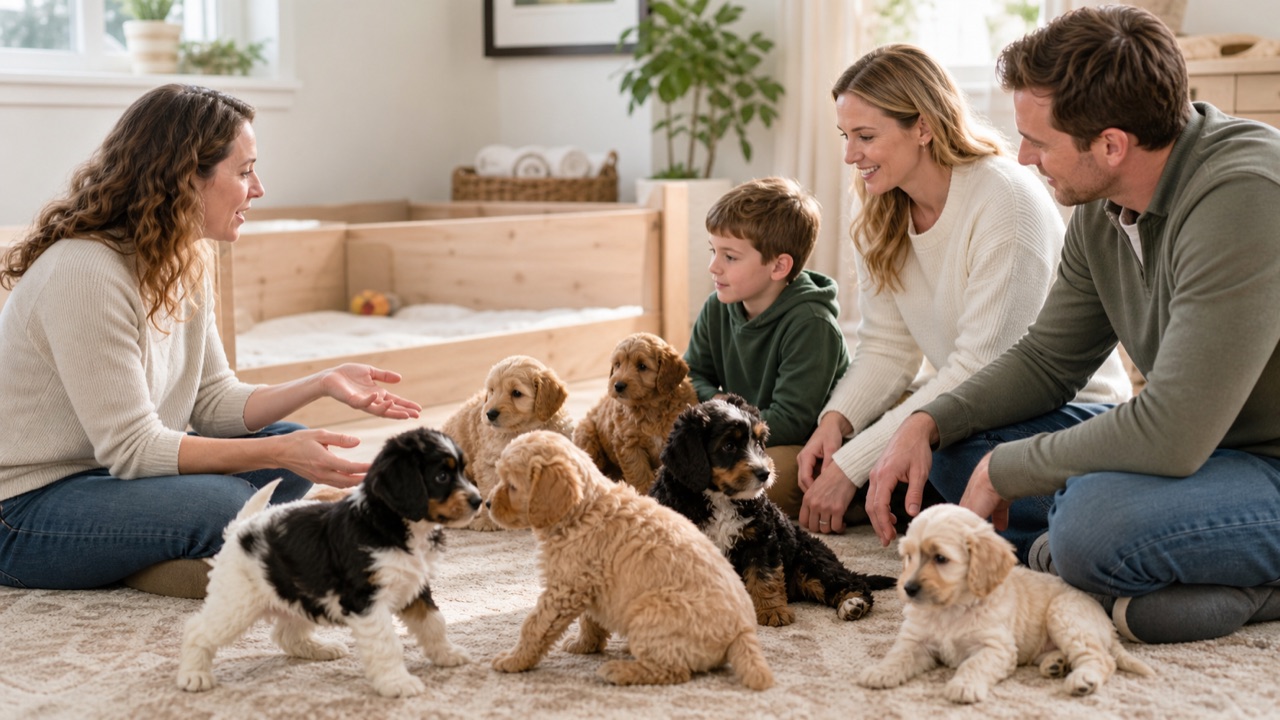
Compare puppy behavior across familiar and new situations, ask the breeder for longitudinal observations, and choose for household fit.
Treat one meeting as a snapshot
A puppy may be sleepy, hungry, recently startled, or especially excited during a single visit. One dramatic reaction or informal test does not predict an entire adult personality. Look for patterns over time and ask the breeder how the puppy behaves during feeding, handling, play, rest, novelty, and recovery from mild surprises.
- Ask for examples from several days rather than labels such as dominant or shy.
- Notice how quickly the puppy recovers after an ordinary new experience.
- Compare behavior with littermates without ranking every difference as better or worse.
Define the household before choosing
Temperament fit depends on daily life. Discuss activity level, work schedule, children, resident animals, visitors, travel, training goals, and experience with the breed. A confident high-energy puppy may suit one home and overwhelm another, while a quieter puppy still needs socialization, exercise, and patient training.
- Describe a realistic weekday instead of an ideal future routine.
- Ask which puppy settles well after play and accepts gentle handling.
- Consider adult breed traits alongside individual observations.
Use supportive, not provocative, observation
Avoid frightening, restraining, or provoking a puppy to force a reaction. Watch voluntary exploration and use gentle age-appropriate interactions. Health, pain, fatigue, and developmental stage can affect behavior, so ask for veterinary input when behavior changes suddenly or appears connected to discomfort.
- Offer choice and space during introductions.
- Observe interactions with familiar caregivers as well as new people.
- Plan continued reward-based training after the puppy comes home.
Key takeaway
Choose from repeated observations, breed knowledge, and an honest household assessment. No single temperament label guarantees future behavior.