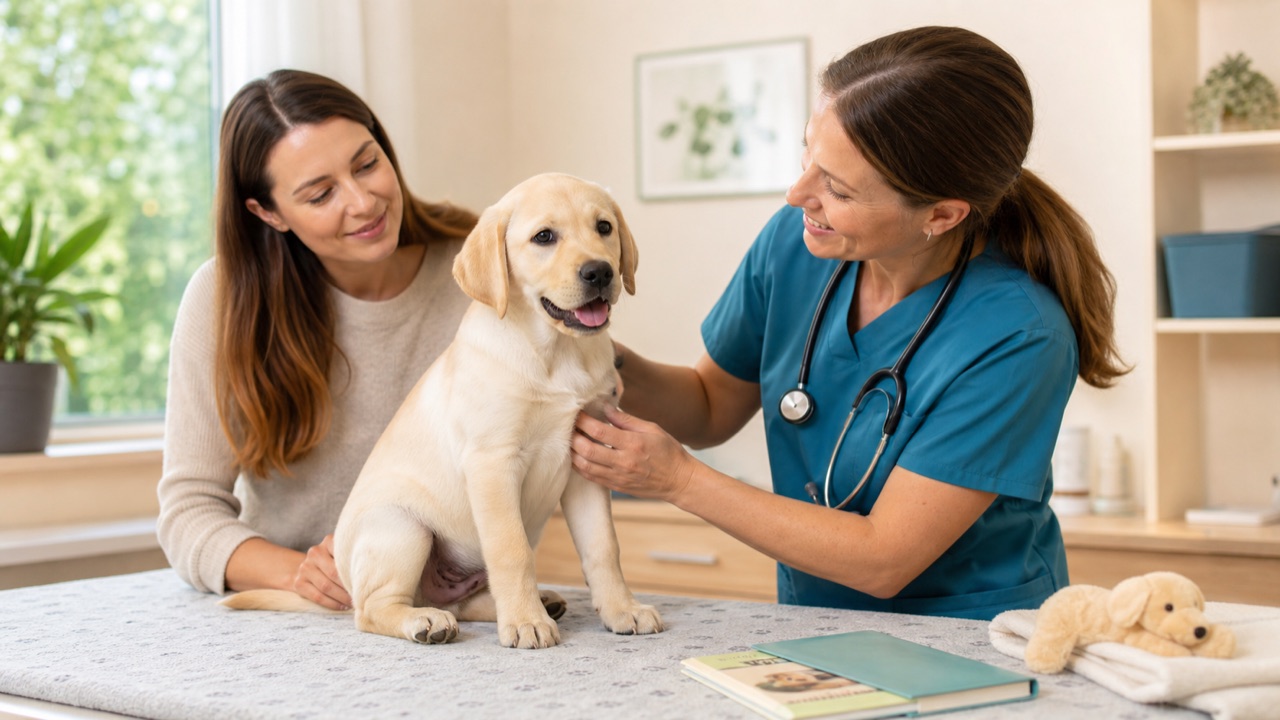
First-Year Puppy Vaccination Guide for New Owners
Understand how veterinarians build an individualized puppy vaccination plan based on age, records, lifestyle, location, and legal requirements.
Vet-aware guidance for preventive care, feeding routines, first appointments, and recognizing signs that need professional attention.
Understand how veterinarians build an individualized puppy vaccination plan based on age, records, lifestyle, location, and legal requirements.
Prepare for your puppy’s first veterinary visits with records, questions, preventive care discussions, and a practical home observation list.
Build a consistent puppy feeding routine using age, expected adult size, body condition, food instructions, and veterinary guidance.
Learn which changes in breathing, energy, appetite, digestion, pain, and behavior should prompt routine, same-day, or emergency veterinary advice.
Build a calm first-year grooming routine for brushing, paws, nails, ears, bathing, and professional appointments without overwhelming your puppy.
Learn how to introduce puppy dental care, monitor changing teeth, choose safe home products, and know when to contact your veterinarian.
A puppy vaccine plan is a series of veterinary decisions, not a single universal calendar. Use this appointment checklist to organize records, lifestyle risks, and follow-up dates with your veterinarian.
Puppy-proofing works best when you remove access to hazards instead of expecting a young dog to ignore them. Use this room-by-room inspection before pickup and repeat it as the puppy grows.
The front of a food bag is marketing; the nutritional adequacy statement tells you whether the product is intended as a complete diet for growth. Use the label with veterinary guidance, not ingredient-list guesses.
A microchip helps only when it can be scanned and connected to current contact information. Record the number, identify the registry, complete registration, and verify the record after every move or phone change.